
The Hazards of Explosives
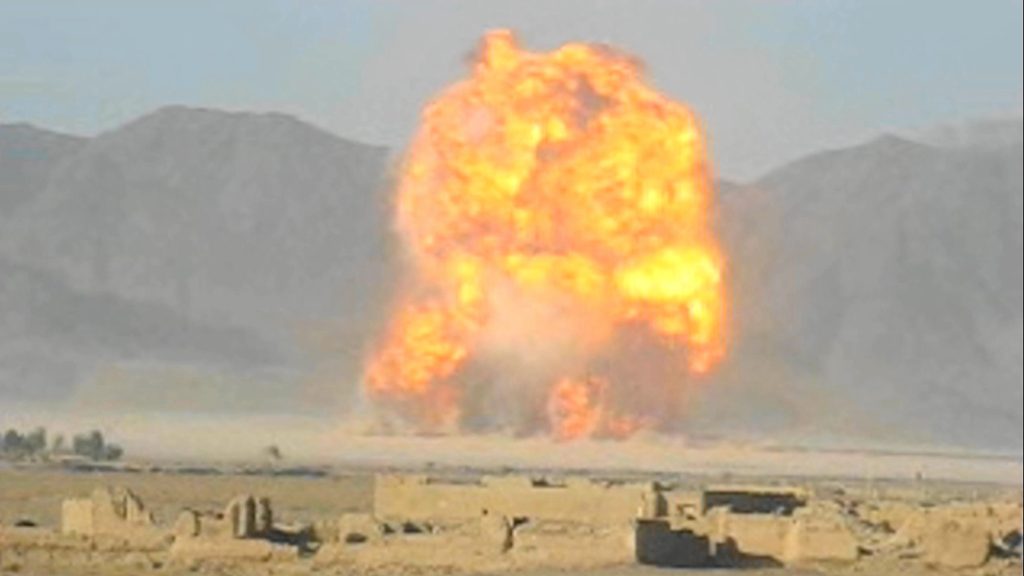
350000 pound Explosives Detonation
My Credibility In Explosives Topics
I no longer actively teach Explosives Engineering at Missouri S&T, but I still work contracts at Loki Incorporated and consult in many different areas – explosives hazards, energetic materials, energetics safety, ballistic performance and pulsed power are among them. I also serve the legal community as an expert witness in cases involving damages due to explosions and pyrotechnic accidents.
Explosive Materials are Inherently Hazardous
In the latter case, it constantly amazes me how many accidents are due to people innocently trying things that are inherently hazardous without realizing the degree of hazard involved. I’m hoping by posting this article I might help to educate someone (or several people) in a way that prevents an accident (or accidents) that will cause property damage, human injury or death.
Online Resources May Not Be Credible
If an online source or one of your friends has caused you think that you should be making your own exploding targets, pyrotechnics or explosives, think twice. Don’t do it! Even with proper training and education, pursuing my profession is hazardous, and it is unlikely you have either one of those. As with using firearms, always consider Safety First!
Regarding online sources, I hope everyone who handloads ammunition as I do, knows not to trust reloading information posted to a forum without independent verification from a reliable source. What about explosives or pyrotechnic concoctions presented in the same way? Even the “Anarchist Cookbook” is not to be trusted. Responsible people “in the know” about the science and engineering of energetic materials will not make information freely available to just anyone who has access to the Internet.
Nevertheless, we do attempt to educate folks for safety and risk reduction reasons about the aspects of energetic materials. Many people have misconceptions about energetic materials that I’ll try to correct. A subset of the broad category of energetic materials includes explosives, propellants and pyrotechnics, which are technically different from each other, but for this article I’m grouping those into the term “explosives” since they can cause “explosions” in the normal vernacular.
Chemical Explosives
In this article, I’ll restrict my discussion to chemical explosives, which release pressurized gas and give-off light and heat when the explosives initiate. Nuclear explosives are a different kettle of fish, even though the effects on its surroundings of a nuclear detonation can be similar, when scaled down, to the effects of a chemical explosive detonation. This detonation requires a source of oxygen (an oxidizer), a fuel, and some stimulus (energy) to set off the process, just like burning. In a manner similar to burning, the chemical explosive reaction is an oxidation type that liberates energy by breaking chemical bonds; contrary to burning, though, the reaction in an explosion (more accurately a detonation) completes itself nearly instantaneously.
The type of chemical exothermic (fancy word for “energy comes out”) reaction varies according to the speed at which the reaction takes place. Rusting of iron-based metals is an example of the slower end of the exothermic reaction range; burning or combustion is a faster reaction than rusting, and deflagration is combustion that propagates through the fuel very rapidly but at subsonic speed. An explosive detonation, however, is a reaction that takes place in and propagates through the fuel at greater than supersonic speed. Detonation, since it occurs faster than the speed of sound, produces a shock wave in the material just like a supersonic aircraft produces a sonic boom in the air through which it travels. Its ability to detonate is the property that sets a chemical high explosive apart from other materials that “explode.”
Let’s Detonate
Unfortunately, the mass media misuses the term “detonate” and its derivatives when they should use “explode,” and this adds to the general confusion about what exactly is an explosive. Different from the rapid gas release and high-pressure generation by a propellant such as smokeless powder, or the explosion of a vaporized combustible fuel such as propane or gasoline, the detonation shock-wave shattering effect of a high explosive such as TNT tears apart any surrounding materials.
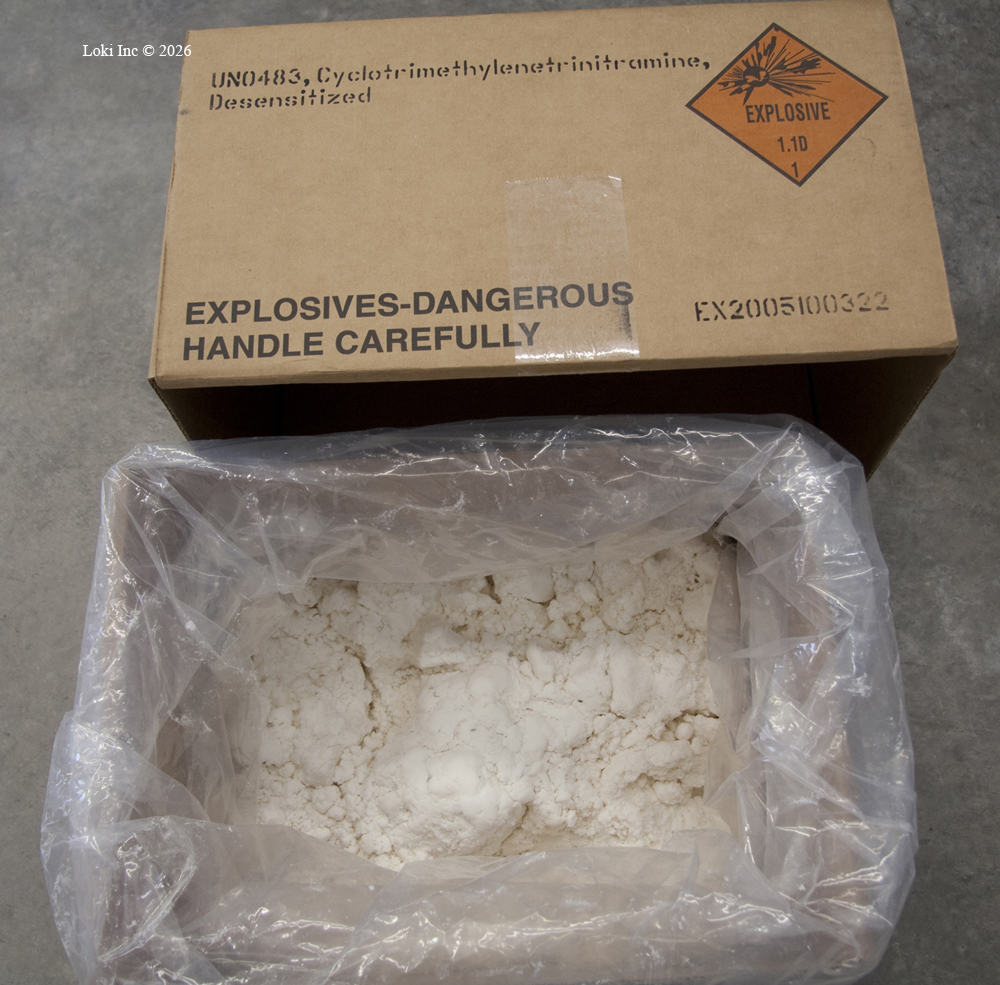
Bulk C-4 High Explosives
Notice that I slipped the term “high explosives” in on you; in the explosives business we had to add “high” in order to separate detonatable explosives from “low explosives,” an old and unfortunate term for materials such as black powder designed to deflagrate but not detonate, much in the same way as propellants. Chemists designed low explosives to produce large volumes of high-pressure gas, and their reaction speeds go nearly to supersonic velocity but don’t quite get there. This is fortunate – otherwise, we wouldn’t have propellants for firearms and rockets, since the detonation shock wave from the reaction would destroy the gun’s chamber and the rocket’s engine. Therefore, an event is not a detonation unless there is a shock wave, and it isn’t a high explosive unless it detonates.
Comparing Fuel Explosions to Explosive Detonations
So what – why all this detail about detonations? At times, after news reports of an accidental natural gas or other fuel explosion, members of the press ask me to compare the explosion to TNT or dynamite.
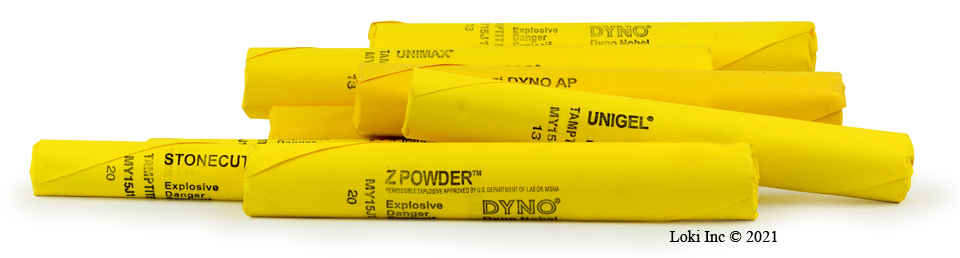
Dynamite Sticks from Various Companies
In each case, the reporters found it hard to believe me when I told them there was no way to make that comparison. They really weren’t interested in the details of my answer (and they never attempted to print the correct information), because they only knew the Hollywood visuals leading them to believe all explosions are created equal. This is similar to the movie lie that someone can shoot another person with a handgun or long gun and knock him off his feet.
In fact, a typical wood fire releases over three times more BTUs (British Thermal Units, an old engineering term that we still use for the amount of heat required to raise the temperature of one mass-pound of water by 10 Farenheit) measure of energy than the detonation of the same mass of TNT or dynamite. This seems to be counter-intuitive, and Hollywood and the press don’t like comparisons that have to be complex, but if you’ve read this far you are well on your way to reading what they won’t tell you.
What Good are Explosives?
If a fuel-air deflagration releases more energy than the detonation of a high explosive, why do we use explosives? Well, we need the detonation shock wave, not the high-pressure gas or the intense heat from the chemical reaction, to shatter the target of a military high explosive shell or bomb. A detonation shock wave also fractures rock when we use explosives in mining; the high pressure gas that comes milliseconds later from the chemical reaction then pulverizes the fractured rock and heaves it so we can dig it with machinery (this isn’t a small matter – we use over 6 billion pounds of explosives every year for mining and construction in the US). This shattering plus pressurization effect is an enormously more destructive (and efficient) process than any other chemical or manual way of breaking rock.
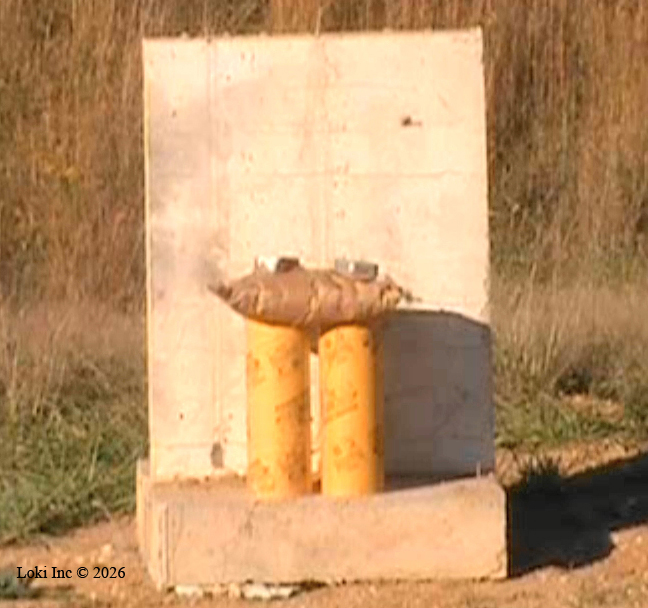
Steel-Reinforced Barrier Shot with 50 pound TNT Equivalent Charge at 8 inch Standoff – Photo 1 from Sequence

Barrier Shot – Photo 2 from Sequence
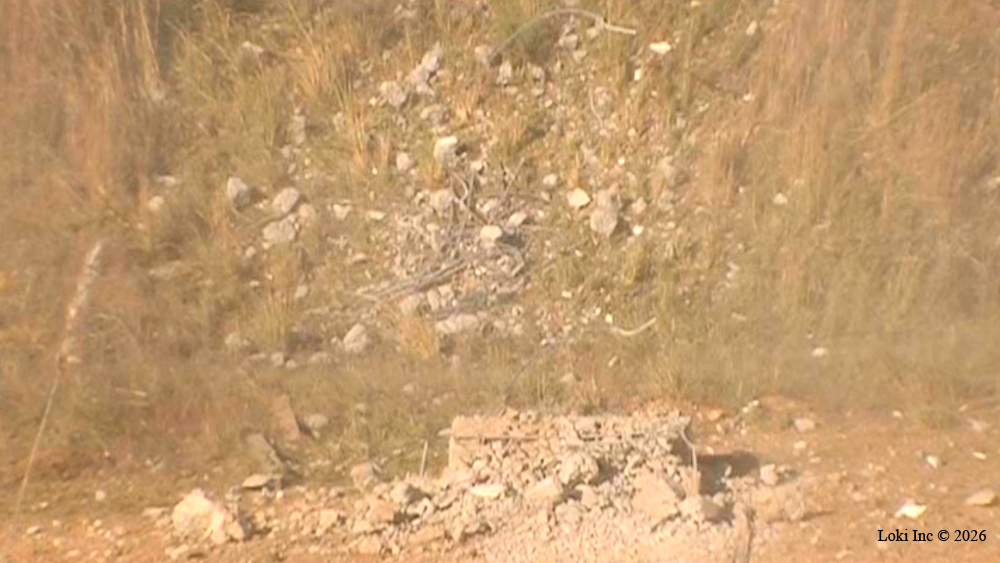
Barrier Shot – Photo 3 from Sequence
We used blasting powder (“low explosives”) for mining in the beginning, but gave it up when researchers invented more effective (i.e., detonable) blasting explosives. We now have an entire suite of rock-blasting explosives, tailored to the requirements, from low shock and high gas volume to more shock and less gas volume.
Bad People May Misuse What Would Otherwise Be Good
Nevertheless, a bad guy can use a low explosive (black powder, for example) or a propellant to make bombs. After the Boston Marathon terrorist attack in April 2013, you may have read or heard about the pressure cooker bombs those terrorists used. This sort of bomb is similar to a pipe bomb, in that a high explosive is not necessary to make it work. The bomb maker takes a strong vessel and fills it with an energetic material that can create enough pressure to burst the vessel. The result is similar to a boiler explosion. It’s an explosion, but it doesn’t involve high explosives. If the terrorists use high explosive charges instead of pressure bombs for an attack, the high explosive charges add a destructive, high-energy blast shock immediately around each bomb, and hurl bomb fragments and pieces of surrounding materials (sidewalks, roadways, parking meters, etc.) at several times the velocity of fragments generated by a pressure burst.
The Safe Explosives Act of 2002
Our government attempted to make it difficult for terrorists to obtain explosives in the US via the Safe Explosives Act of 2002, which introduced restrictions on all purchases of explosive materials. Prior to the Act, one could purchase and use explosives in his State of residence without any Federal restrictions. Some of you may remember those days; I remember being able to as a teenager to purchase dynamite, detonators, and safety fuse at the local hardware store (after my Dad let the store owner know that it was okay) to use shooting post holes in the rocky Ozarks ground where I live. It’s questionable whether the Act made us any safer; similar to gun control laws, when a law restricts our activities only law-abiding people obey the laws. For example, Timothy McVeigh brought down the Murrah building in Oklahoma City in 1995 using materials whose acquisition would have been unaffected by the Act, since he stole the items from a rock quarry needed to initiate the blast. He purchased the fertilizer and racing fuel required for the main charge by means not covered by the Safe Explosives Act. https://www.fbi.gov/history/cases-and-criminals/oklahoma-city-bombing
Exploding Targets – Safety and Government Regulation
How about exploding targets? If we have a Safe Explosive Act that restricts most people from buying explosives, why can we buy Tannerite™ from a store or online?
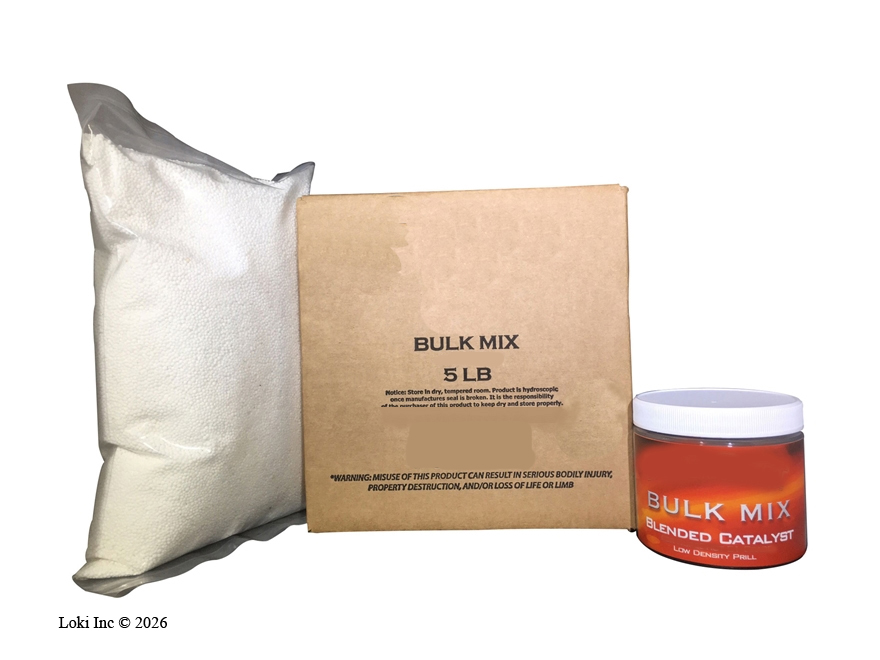
Generic Exploding Target Product Components
I’m sure many of you have used the targets – almost everyone is thrilled to see and hear an explosion, and the targets are safe if used according to the directions that come with the packaging. Some people, when they find-out that I’m an explosives engineer, ask me why those targets aren’t severely regulated. “They explode, so aren’t they explosives?” In many cases, the clear intent behind such questions is that the person asking thinks those targets should be regulated by the ATF, and cannot understand how any reasonable person could think otherwise.
State regulations may be coming, because I’ve also been asked by a couple of State Fire Marshalls to help them answer legislators’ questions about regulating exploding targets. Nevertheless, the reason there are no Federal regulations of these targets is because the reacting materials, the oxidizer and fuel components, are sold separated into different containers. These chemicals are common materials used for many industrial and commercial purposes other than exploding targets, and the Feds don’t have explosives regulatory power over them while the materials are separated. For some formulations with particular oxidizers, the exploding target components are not explosives until the fuel and oxidizer are mixed. For others, after mixing the fuel and oxidizer one must also combine the mixture with a small amount of a so-called catalyst (a small portion of the fuel that reacts with the oxidizer under shock loading from a projectile impact more easily than the remaining fuel).
Once mixed, a target must be used right away because it is now an energetic material that can be detonated; legally, the mixture cannot be stored unless the owner has a Federal Explosives License, the requisite State permits/licenses, and a magazine approved for explosives storage. So, don’t mix your exploding target ingredients together ahead of time and put the mix on the shelf. Also, be sure to store and mix the ingredients according to the label directions. I once consulted on the particulars of a lawsuit where a man did not follow the directions and nearly killed himself while attempting to break-up chunks of target ingredients after mixing them together. The main ingredient of many of these targets is hygroscopic, and the granules will fuse together if you leave them exposed to a humid environment for a period of time. He lost the suit because he did not follow the package directions regarding storage and mixing.
Another area the Feds have restricted with regard to use of exploding targets is by banning them from US Forest Service and Bureau of Land Management lands in some states, claiming that explosions may start wildfires. If this is the case, why not just ban exploding targets, as they ban campfires, in specific locations when wildfire conditions are present? I’ll leave the answer to you.
Resources for Understanding Rules and Regulations
If you are curious about some of the myriad of Federal rules regarding explosives, try looking at atf.gov/explosives and the submenus found at that website. Strangely, Federal regulation of explosives use and storage depends on how the government categorized them for shipping. Therefore, the US Department of Transportation (see websites such as phmsa.dot.gov and fmcsa.dot.gov) govern the Federal regulation of transportation (and therefore categorization) of hazardous materials such as explosives. The Institute of Makers of Explosives (ime.org), and the International Society of Explosives Engineers (isee.org) are non-government organizations that are good sources for information about explosives, the application of explosives, and explosives-related training and education.
The Bottom Line – Be Aware of the Hazards
One of my former bosses was an explosives chemist, and used to say that he was one of the few of his colleagues who still had all his fingers. It’s one of those self-deprecating jokes that is funny because there is a foundation of truth to it. If the folks trained to work with energetic materials still face on-the-job injuries or death, what are the chances that you, the untrained and internet-educated sort, can mess with hazardous materials without being injured? Don’t even try it.
Also, don’t be a dead hero – if you spot something that looks like an explosive material or device that is obviously not where it should be, don’t fool with it!
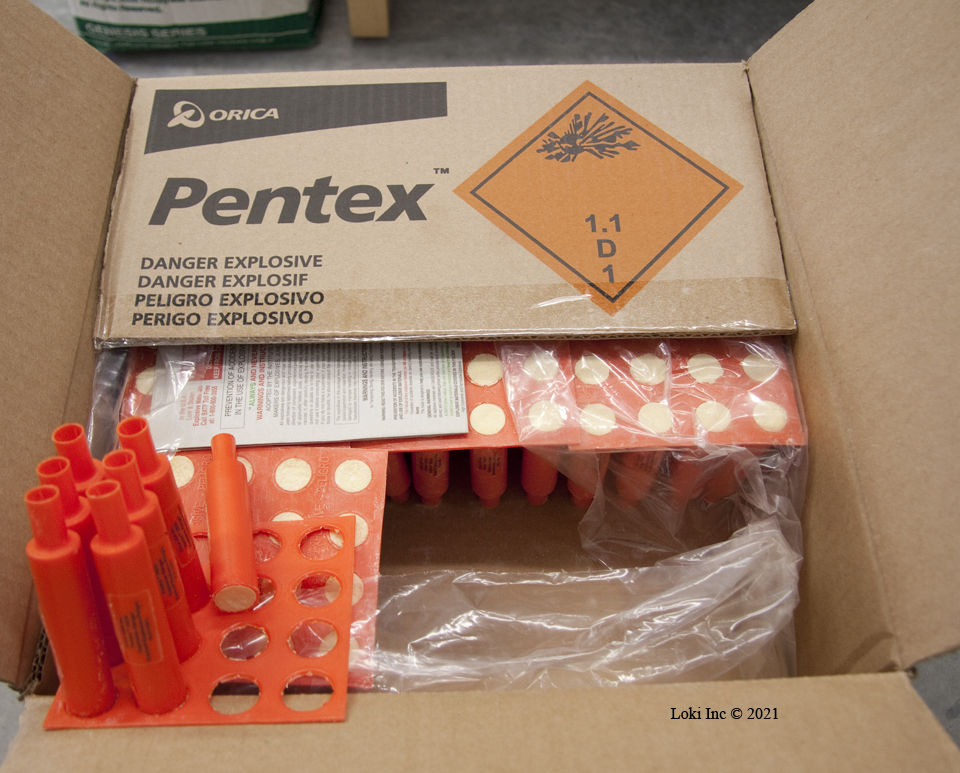
20 gram Pentolite (PETN + TNT) High Explosive Boosters
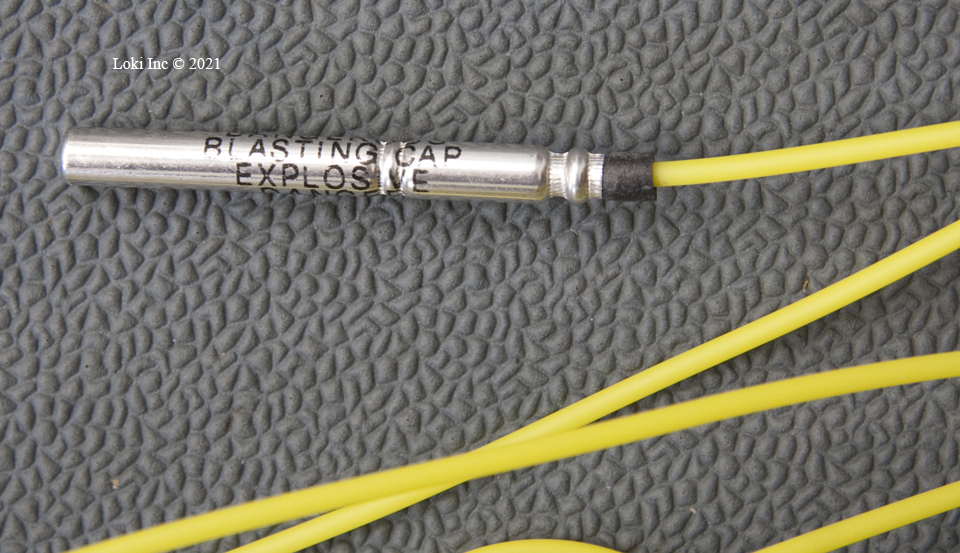
Non-Electric Detonator (Blasting Cap)
Don’t be like the sheriff’s deputy attending one of my courses, who told a story one morning before class about responding to a domestic dispute. After he and his partner handcuffed the wife abuser who was the subject of the call, the wife said the old man had some bad stuff in the garage. So, the deputy checked it out. When he peeked into a cooler, he spotted a grenade sitting there. I asked the deputy what he did – what do you think he said? “I stuck the cooler into the back of the squad car and took it to the jail.” Bad idea! Particularly, since he couldn’t tell a live grenade from an inert one. If you find yourself in a similar situation, step back, clear the area and call the professionals to handle the situation.
Recent Posts
September 11, 2026Review: The Suppressed Ruger-5.7 Pistol
July 27, 2026 September 23, 2025.22 Caliber Suppressor Cleaning
August 20, 2025Trophy Hunting – Is it Ethical?
August 6, 2025